How to Pack a Carry-On Like You Travel for a Living
A repeatable system for packing a carry-on bag: what to list first, how packing cubes actually work, and the 10-minute check before every flight.

We pick every product independently. If you buy through our links, we may earn a commission at no cost to you. How we make money.
Frequent flyers don't pack better because they own better luggage. They pack better because they stopped improvising. The same list, the same order, the same three questions before they zip the bag shut — and forty minutes later they're at the gate instead of standing over an open suitcase deciding, again, whether they need a third pair of shoes.
None of this requires a minimalist wardrobe or a $600 bag. It requires a system you run the same way every time, so packing stops being a decision and starts being a checklist. Here's the one that holds up whether you're gone for two nights or five. (If you only fix one habit today, skip to how to start.)
01. Make a list before you touch a single shirt
The instinct is to start pulling clothes off hangers and see how much fits. That's how you end up with four button-downs and no clean socks on day three. Instead, write the list first, organized by category — tops, bottoms, layers, shoes, toiletries, electronics, documents — and only then start pulling items to match it.
Why it matters: a list built by category forces you to notice gaps (no rain layer, only one pair of shoes) before you're at the airport, not after.
Common mistake: packing by outfit ("Tuesday: navy shirt + chinos") instead of by category. Outfit-based packing means you can't mix pieces, so you end up bringing more clothes than a capsule wardrobe would need.
02. Choose a shell that fits the bin every time
Not every "carry-on" actually is one. Airline size limits vary just enough that a bag sized for one carrier gets gate-checked on another. Before you buy anything, measure your most-used airline's limit and buy a hard shell built to that number, with a compression system so a slightly overpacked bag still zips flat.
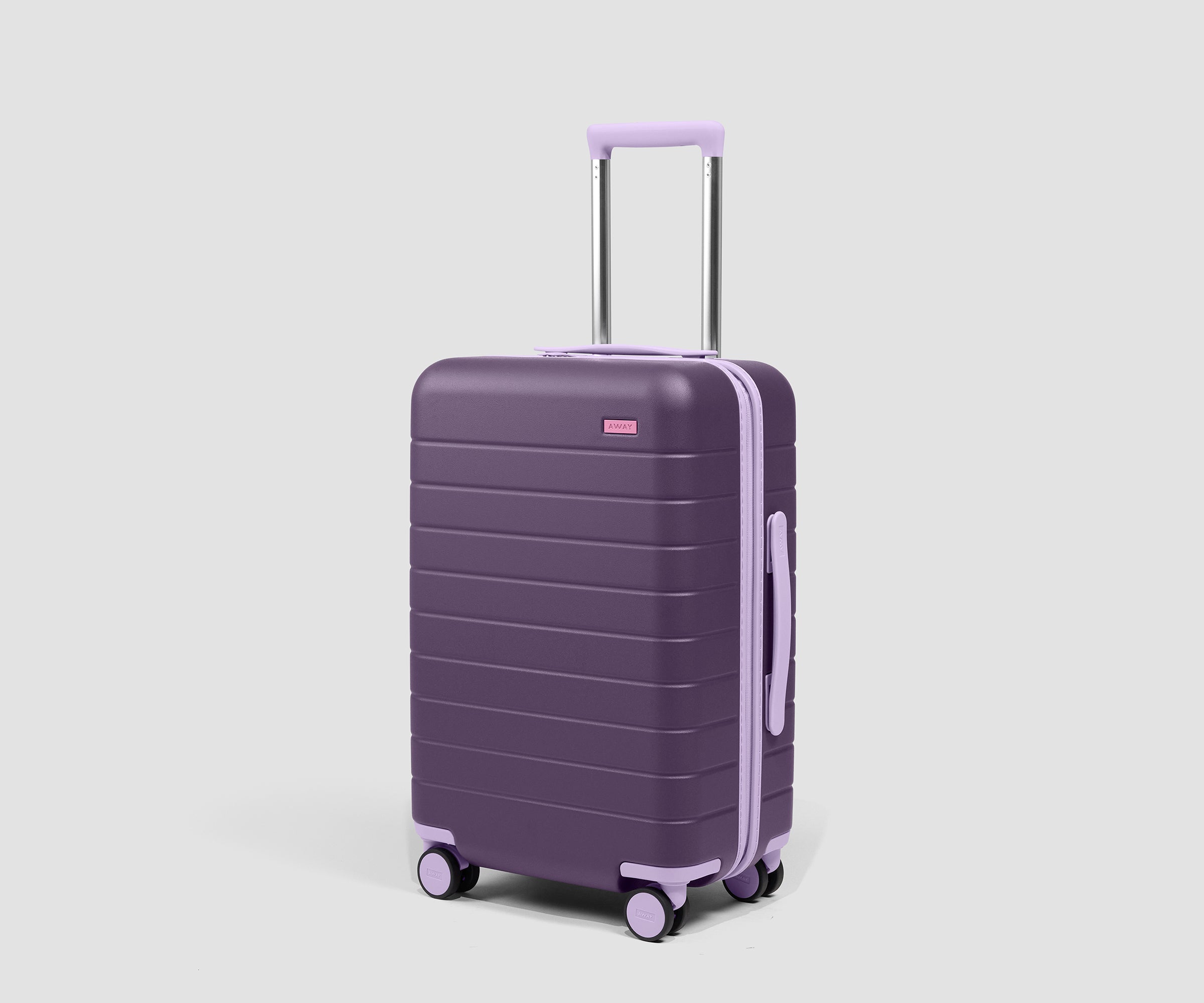
Why it matters: a hard shell protects anything fragile packed near the edges, and a built-in compression strap does the job a stack of rubber bands used to do.
Common mistake: buying the largest bag technically allowed "just in case." The extra two inches of depth is exactly what tempts you to overpack, which is how a carry-on ends up getting checked at the gate anyway.
03. Compress by category, not by outfit
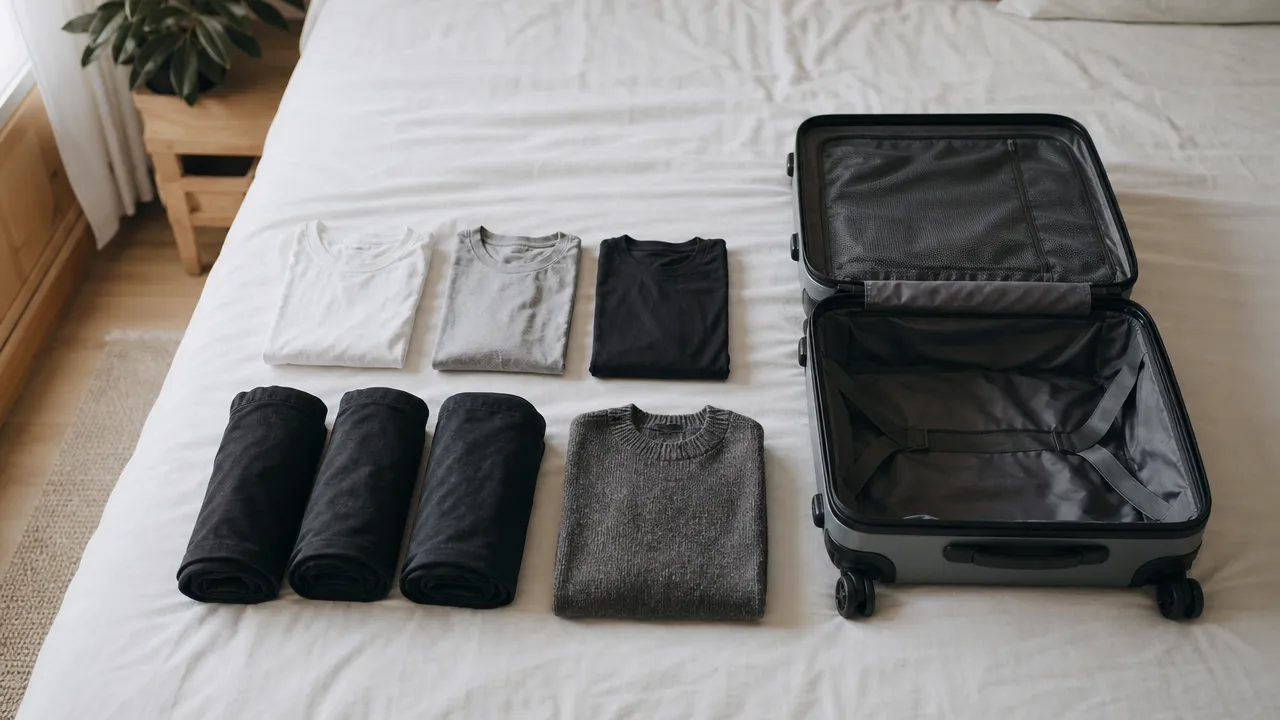
Once the shell is right, the inside needs the same discipline. Packing cubes aren't just a way to keep things tidy — they let you compress a whole category of soft clothing (all your t-shirts, all your underwear) into one dense block you can find and remove without touching anything else in the bag.

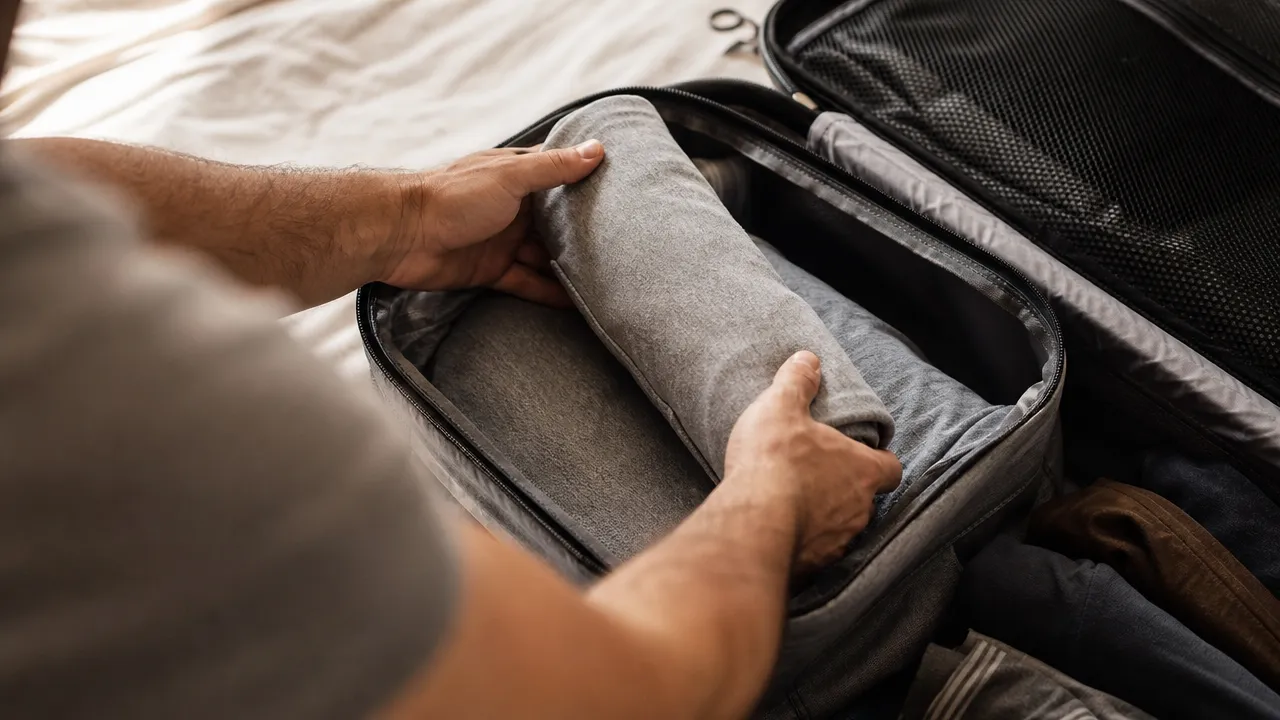
Why it matters: you can search a packing cube in three seconds instead of unpacking the whole bag to find one t-shirt at the bottom.
Common mistake: buying one giant cube for "clothes." Two or three smaller cubes, split by category, beat one large one every time — you only ever need to open the one you're looking for.
04. Roll the casual stuff, fold anything tailored
The roll-versus-fold debate has a simple answer: it depends on the fabric. Knits, t-shirts and casual cottons roll tightly and resist wrinkles. Structured pieces — a blazer, a dress shirt, wool trousers — hold their shape better folded, because a tight roll creases exactly where the fabric doesn't want to bend.
Why it matters: the wrong method on the wrong fabric is how a blazer comes out with a crease across the chest, or how a stack of folded t-shirts eats twice the space they need to.
Common mistake: rolling everything because it's the trendier tip. A rolled blazer looks fine going in and terrible coming out.
05. Build a 3-day capsule that remixes into nine outfits
Five or six pieces that all coordinate with each other beat twelve pieces that only work in fixed pairs. Pick one neutral base color (navy or charcoal), one pattern, and pieces that can move between day and evening: a knit that layers under a jacket, trousers that work with a boot or a sneaker, one jacket that covers both.
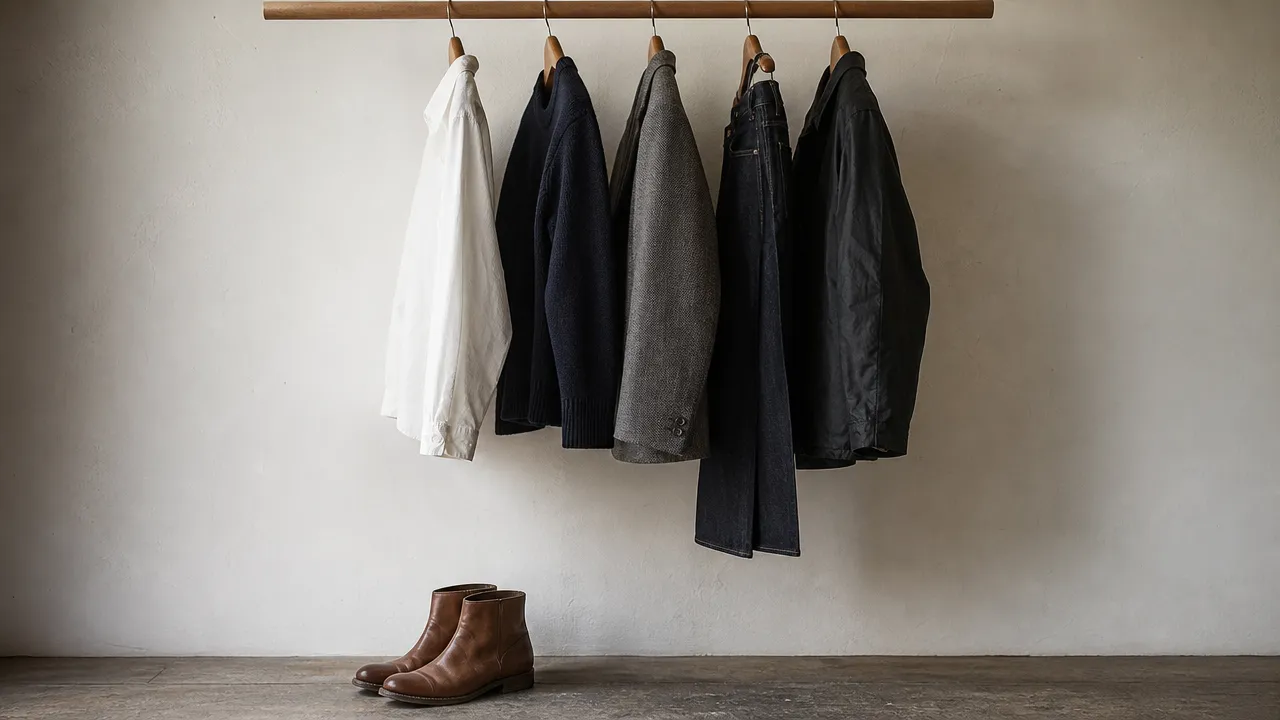
Why it matters: a true capsule means every top works with every bottom, so five pieces cover a week without repeating an outfit twice in a row.
Common mistake: packing one "statement" piece that only pairs with one other thing. If it only works with one shirt, it's not earning its space in a carry-on. A leather jacket is the exception worth the space — it works as your plane layer and your evening layer, the way the pieces in our leather jacket guide are built to do. Bring one pair of shoes that can dress up and down, like the versatile pairs in our retro sneaker guide, and one watch that covers a boardroom and a bar, the way a steel diver from our luxury dive watch guide does.
06. Give cables and chargers their own home
The bottom of a carry-on is where phone chargers, a laptop brick and a tangle of cables go to disappear. A small dedicated pouch with its own compartments fixes that — everything has one spot, and you can find the right cable at security without unpacking your socks.

Why it matters: a pouch that opens flat means you can see every cable at once instead of digging through a bag.
Common mistake: using the pouch that came with your headphones. It holds one thing. A dedicated tech pouch with dividers holds a charger, a cable, a battery pack and a set of earbuds without turning into a knot.
07. One clear bag for liquids, checked before you leave the house
TSA's rule hasn't changed in years and it still catches people at security: containers 3.4 oz / 100 ml or under, all of them in a single clear quart-size bag, removed and placed in a bin on its own. Pack this bag last and put it somewhere you can reach without opening the whole suitcase.
Why it matters: a forgotten full-size bottle is the single most common reason a carry-on gets pulled aside for a manual search.
Common mistake: packing liquids inside a packing cube "to save space." They need to come out fast at the checkpoint — keep them in their own bag, not buried in one for clothes.
08. Run the 10-minute pre-flight check
Before you leave, run through the same short list every time: charger and cables packed, liquids bag accessible, ID and boarding pass in one pocket, a change of essentials in case the bag is delayed, shoes at the bottom, heaviest items closest to the wheels. Ten minutes now saves an hour of scrambling at the gate.
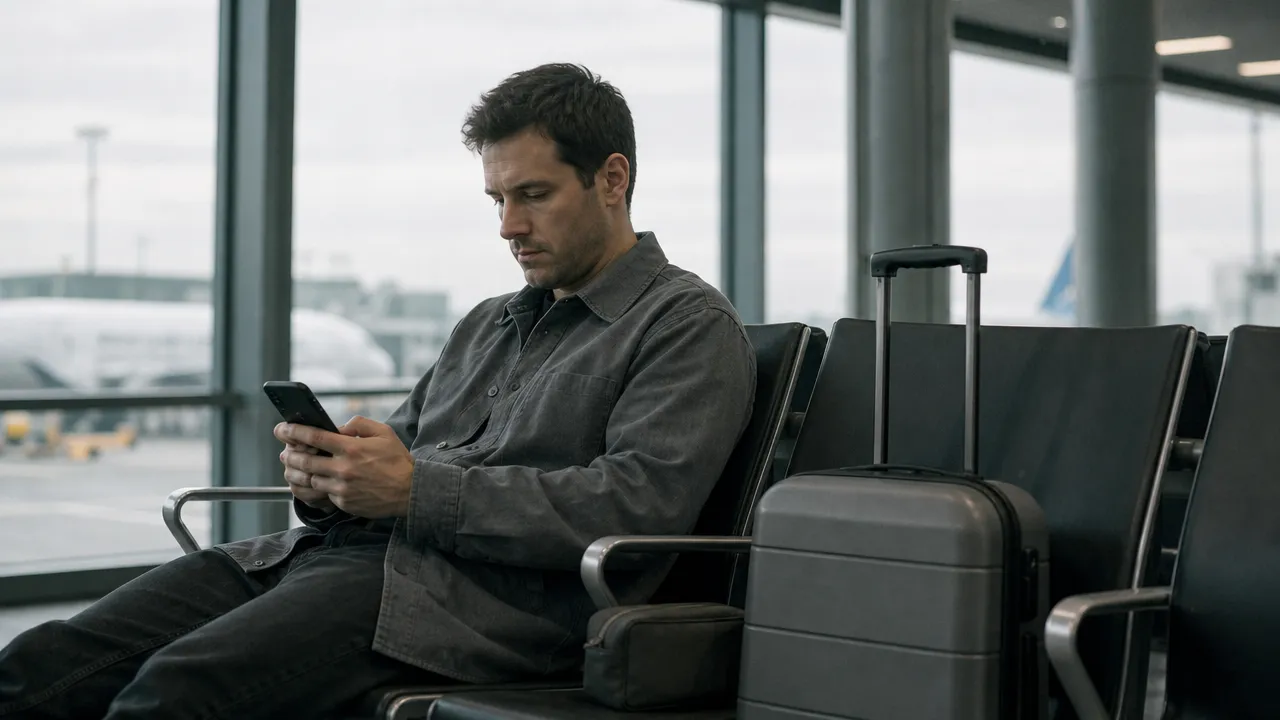
Why it matters: most travel stress comes from uncertainty, not the trip itself. A fixed checklist removes the "did I forget something" loop entirely.
Common mistake: packing workout gear "just in case" and never using it. If staying active on the road matters to you, pack light and pick routines that don't need equipment — our 15-minute abs workout is built around exactly that, no hotel gym required.
How to start
You don't need to overhaul your whole travel kit before your next trip. Start with the one habit that saves the most time:
- On a budget: write the category-based packing list first, even in your phone's notes app. It costs nothing and it's the single biggest fix.
- Best all-rounder: two or three packing cubes. They make everything else on this list easier, from finding a shirt to seeing what's left to pack.
- The upgrade: a properly sized hard-shell carry-on with a compression system, so the bag you own stops being the reason you overpack.
Then run the same system on your next trip, and the one after that. If the trip is by car instead of plane, the same packing discipline applies to the trunk — see our car accessories guide for what's worth keeping back there. More travel-ready gear lives in Living.
Shop the look


FAQ
How do I pack a carry-on for a week-long trip?
You don't pack for seven days, you pack for three and plan to rewear and re-pair. A capsule of five or six pieces that all match each other, plus one layer for warmth, covers a week for most men. Add laundry (hotel or a sink) if the trip runs longer.
What's the actual point of packing cubes?
Packing cubes group your clothes by category (tops, bottoms, base layers) instead of by outfit, so you can find anything without unpacking the whole bag, and they compress soft clothing enough to free up real space. They're not magic, but they turn a duffel of loose clothes into a bag you can actually search.
Should I roll or fold my clothes for a carry-on?
Both, depending on the fabric. Roll casual knits, t-shirts and anything that shrugs off wrinkles. Fold tailored pieces — blazers, dress shirts, structured trousers — so the fabric doesn't crease along a tight roll. Most carry-ons end up with a mix of both.