The Modern Man's Home Bar: What You Actually Need
Skip the 40-bottle bar cart. Here's the short, smart list of glassware, tools and ice that actually get used — plus what to pour once it's set up. For 21+ readers.
We pick every product independently. If you buy through our links, we may earn a commission at no cost to you. How we make money.
Most home bars get built backward. A guy buys eight bottles he saw recommended somewhere, sets them on a shelf, and pours drinks into whatever glass is closest to the sink. The bottles get less attention than the glassware and ice ever do — and it shows in the drink.
The better order is the opposite: buy the things that touch every single pour first — the glass, the ice, the way you measure — and let the bottle count grow slowly after that. None of this requires a finished basement or a bartender's vocabulary. It requires about six purchases, most of them under $60, and a little bit of patience. (Reminder: everything below is for readers 21 and older. Drink responsibly, and never mix alcohol with driving.)
This isn't a project you finish in a weekend, and it shouldn't be. A home bar built all at once, from a single shopping list, tends to look like exactly that — a shopping list. One built over a few months, piece by piece, ends up looking like it belongs to you: the glass you kept because you liked how it felt, the bottle you kept refilling because you actually finished it, the tray you found because the first one wasn't quite right. The list below is ordered by what changes a drink the most, not by what looks best in a photo, so you can build it in the order that actually pays off first.
If you only fix one thing this week, skip to how to start.
01. The glass comes before the bottle
A cheap, thin glass makes even a good pour feel like an afterthought. A heavy, cut-crystal rocks glass does the opposite: it sits solidly in your hand, keeps a drink cooler for longer because the glass itself is thicker, and makes the same $25 bottle look like a $60 one.
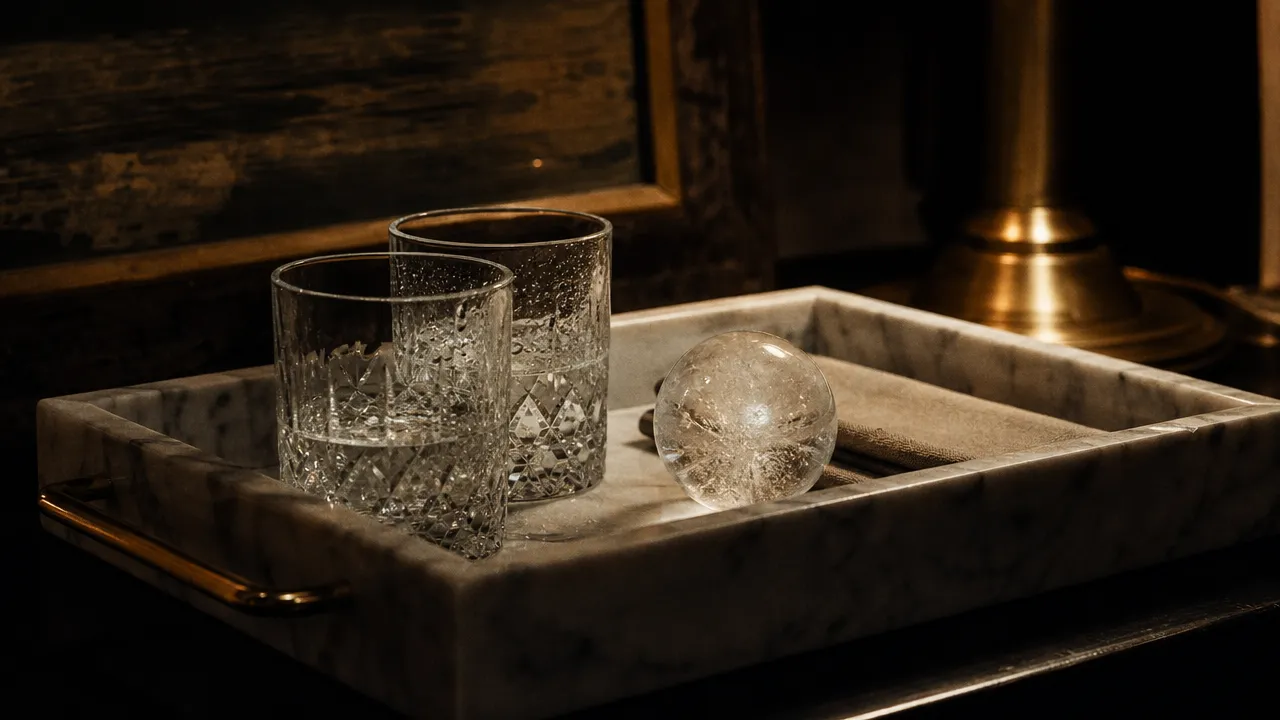
You need exactly two, not a full bar's worth. A double old-fashioned or lowball shape, wide enough for a single large cube or sphere, handles a whiskey neat, a whiskey on the rocks, an Old Fashioned and a Negroni without ever feeling like the wrong glass for the drink. Skip the tall highball and the stemmed cocktail glass until you know you'll actually reach for them — most home bars never do.
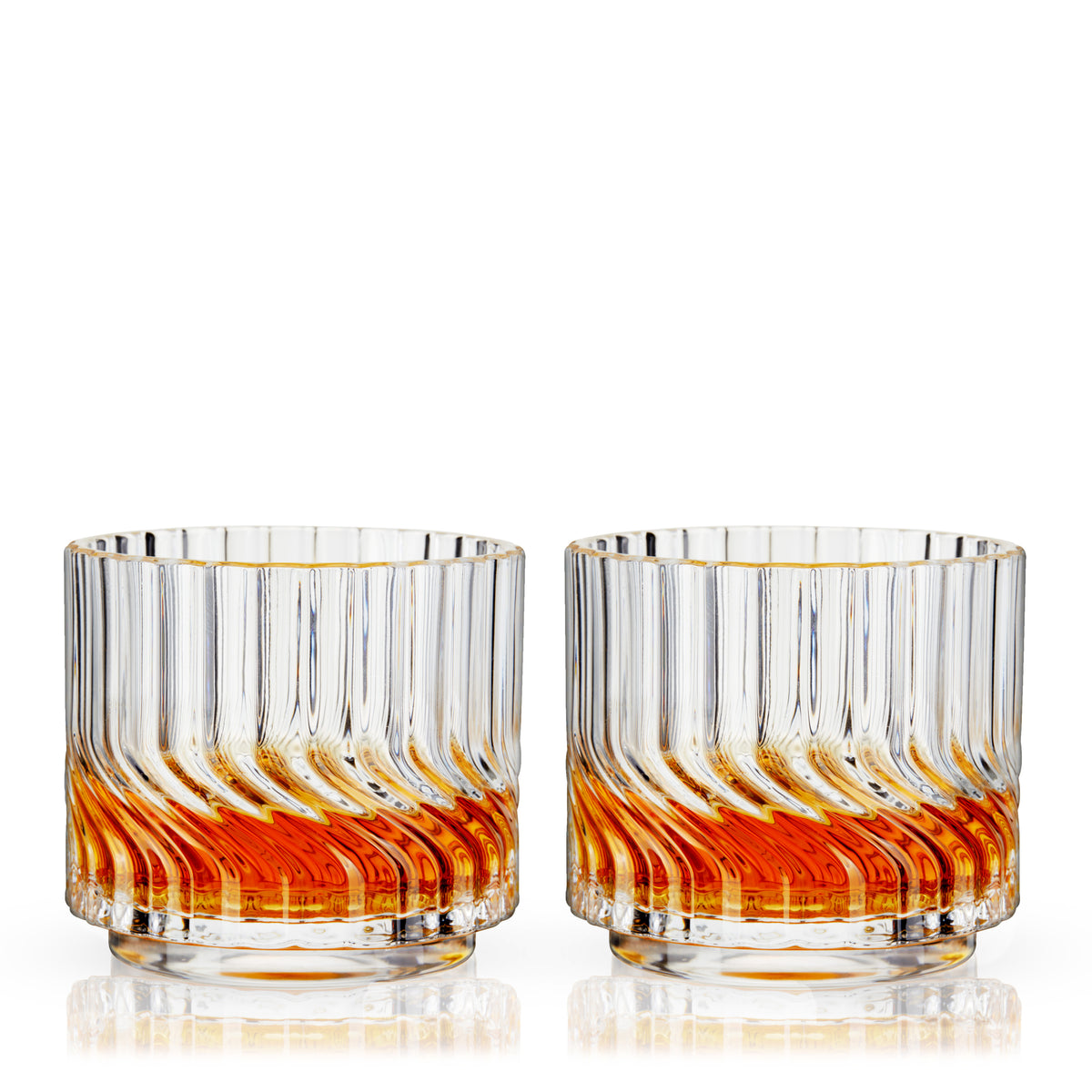
Common mistake: buying a 12-piece mixed glassware set from a big-box store because it's cheaper per glass. You'll use two of the twelve. Buy two glasses you'll actually reach for instead of ten you won't.
02. One good decanter, not ten bottles
You don't need to decant everything — most bottles are fine standing in their own packaging. But your workhorse bottle, the one you pour most weeks, earns a decanter. It looks intentional on a shelf or cart, and a tight stopper slows the slow oxidation and evaporation that happens once a bottle sits open for months.
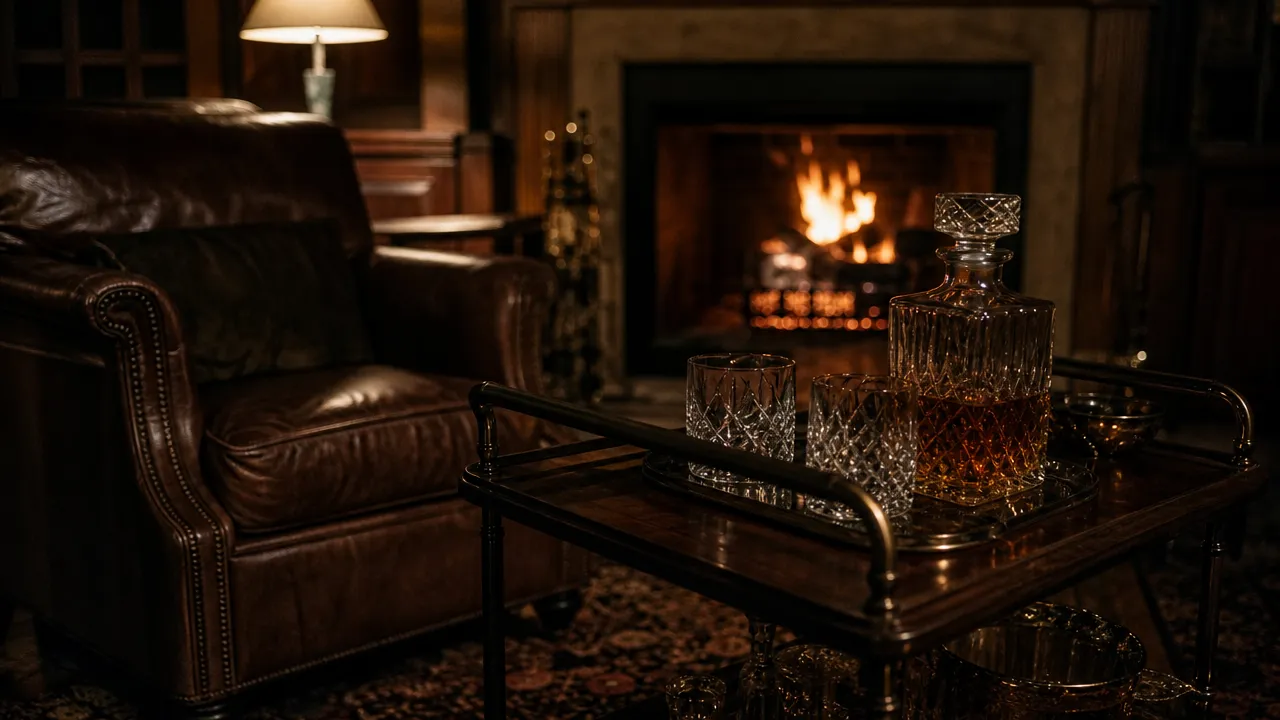
Think of it as the one piece that does double duty: it's practical storage and it's the thing people notice first when they walk up to your cart. A clear, uncut crystal shape reads as classic and works with anything from bourbon to gin; a heavier cut pattern like the one below adds a bit of visual weight without needing a name-brand bottle behind it.
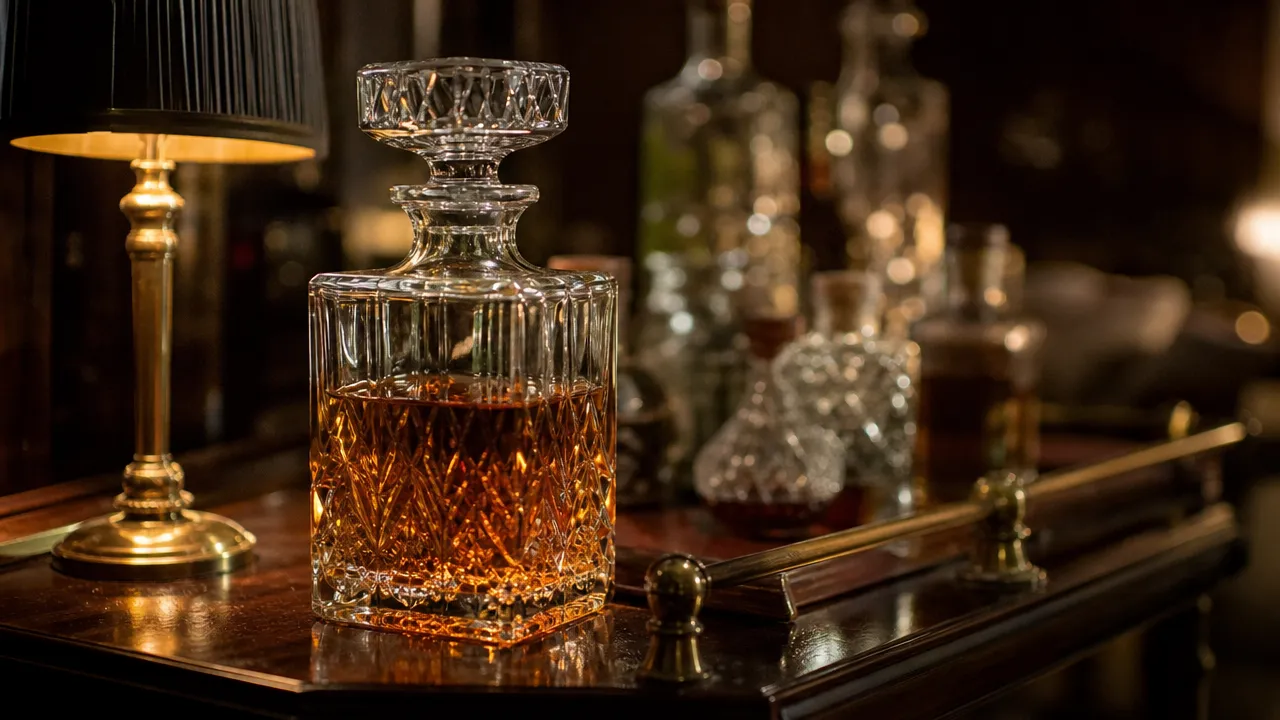
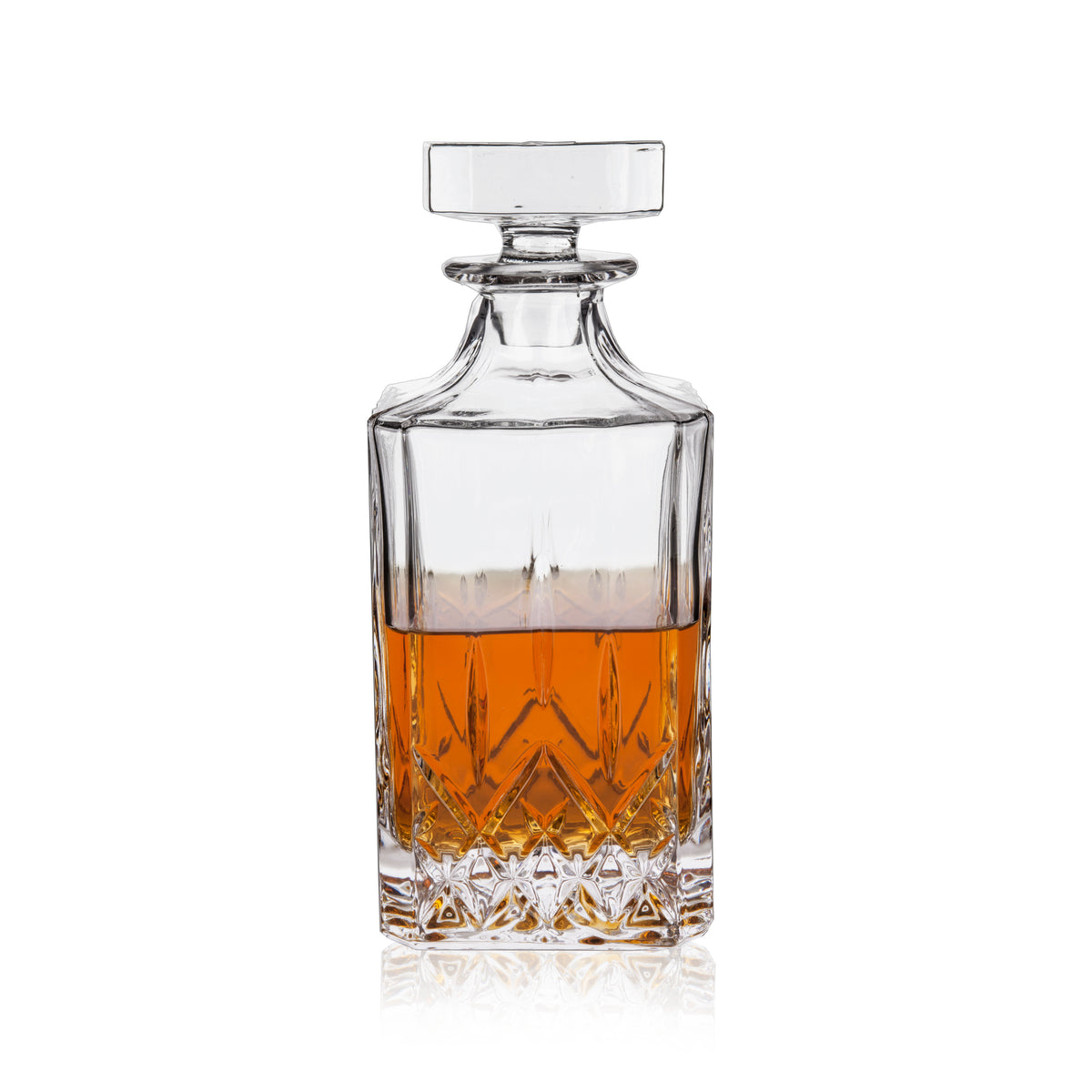
Common mistake: decanting a bottle you only open twice a year. Save it for the one you'll refill often enough to justify washing the decanter out.
03. Learn to pour with a jigger, not your eye
Free-pouring looks confident in movies. In your kitchen, it means every drink you make tastes a little different, and most of them end up stronger and sweeter than you meant. A jigger costs less than a cocktail at a bar and fixes this permanently.
The double-cone Japanese style — a small cone on one end, a larger one on the other, usually marked in ounce and half-ounce lines — is the standard for a reason. It measures both the spirit and the modifier in one tool, it's easy to read even in low bar-cart lighting, and it's small enough that it never looks out of place sitting next to your glass.
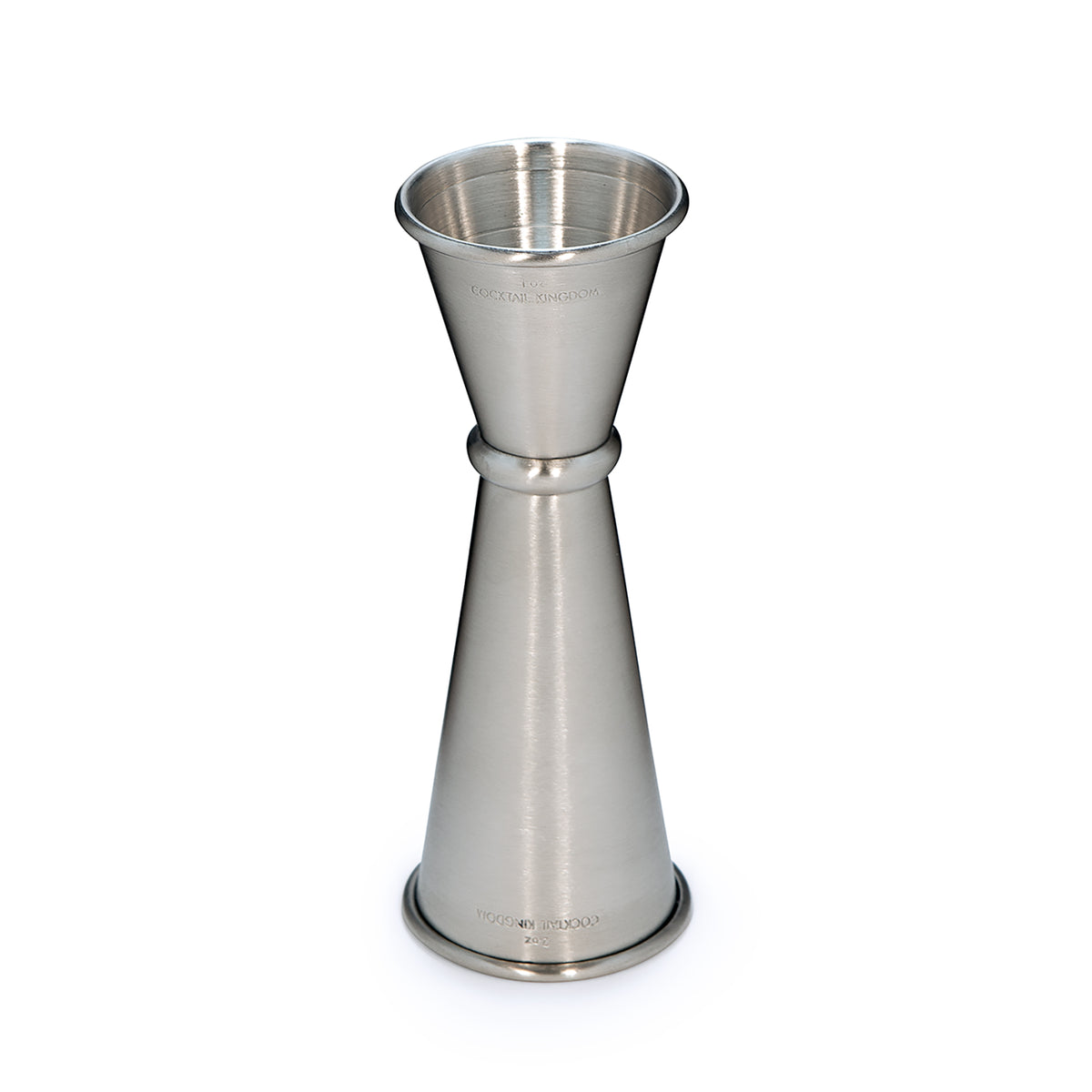
Common mistake: treating a jigger as a tool only for cocktails. Use it for a simple whiskey pour too — you'll notice you've been over-pouring for years.
04. Two shaker tins beat one do-it-all gadget
A Boston shaker — two metal tins, one bigger than the other, that seal together — is what most working bartenders actually use. It's simpler to clean than a three-piece cobbler shaker with a built-in strainer, and it seals better once it's cold, which is exactly when you need it to.
You'll strain through a separate spring strainer (a small, inexpensive add-on) rather than a built-in cap, which sounds like an extra step until you realize it's the difference between a shaker that works every time and one that jams shut after a few uses. Shake anything with juice, egg white, dairy or syrup; stir anything that's only spirits, like a Negroni or a Manhattan, so you don't over-dilute or cloud it.
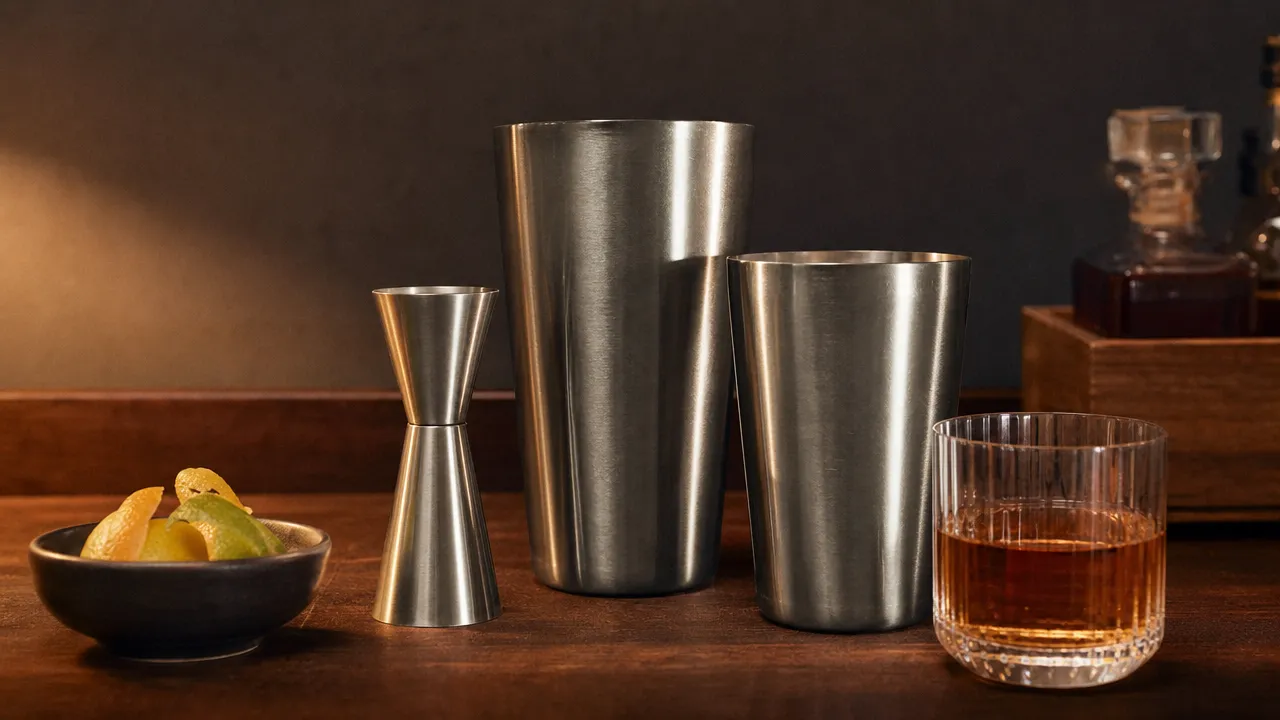
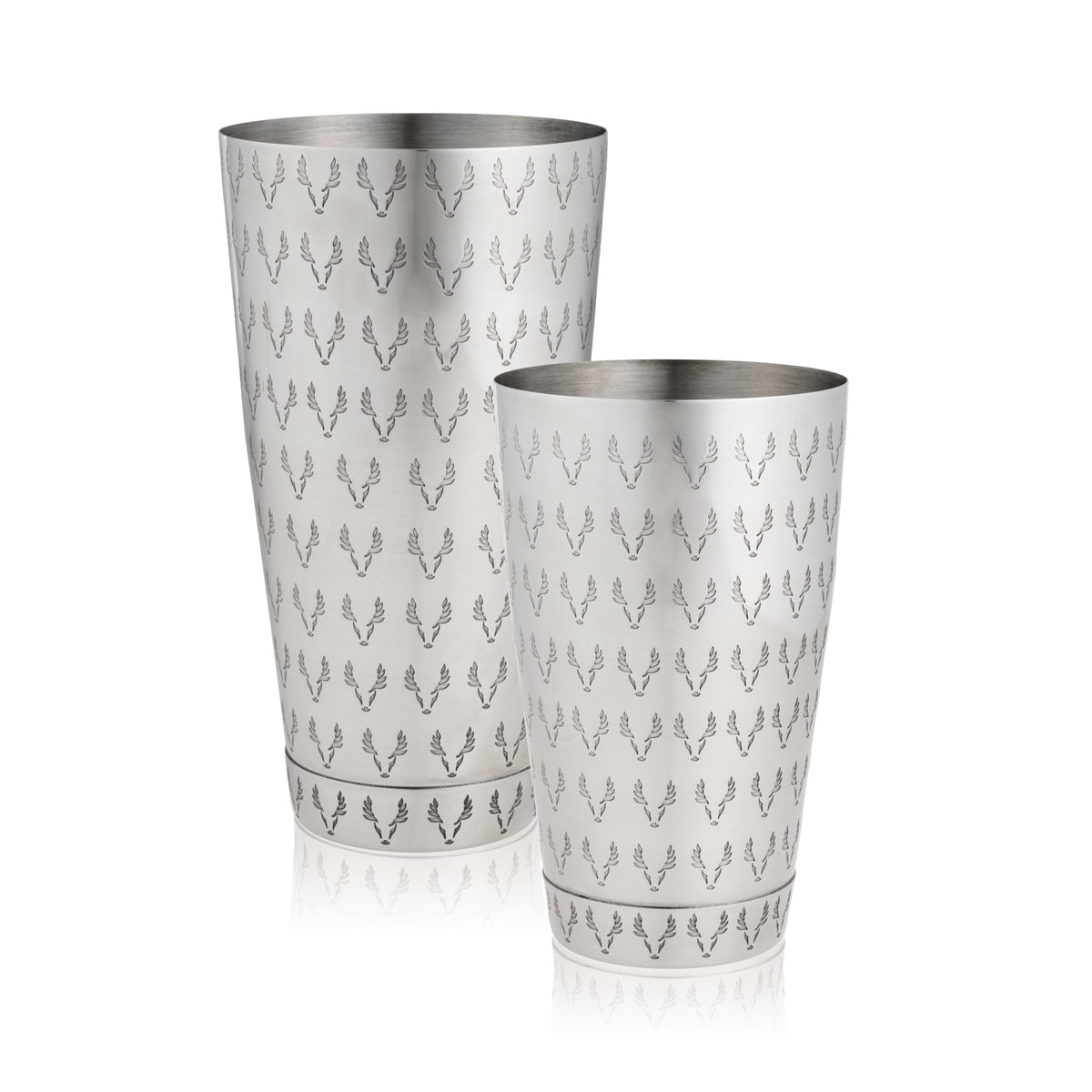
Common mistake: buying a shaker with a built-in strainer before you've made ten drinks with a plain set of tins. Learn the basic shake and seal first; the gadget rarely earns its price back.
05. Ice that doesn't water everything down
Ice is the most overlooked ingredient in any home bar. Small, cloudy cubes from a standard freezer tray melt fast because they have more surface area and more trapped air, which dilutes a drink before you're halfway through it. A large, dense cube or sphere melts slowly and stays cold longer.
A directional-freeze mold, which freezes from the top down and pushes the cloudy, mineral-heavy water to the bottom before you pop it out, gets you most of the way to the clear ice you see at a good bar without buying a dedicated ice-making machine. Make a batch the night before, not the hour before — these molds take longer to freeze solid than a standard tray.
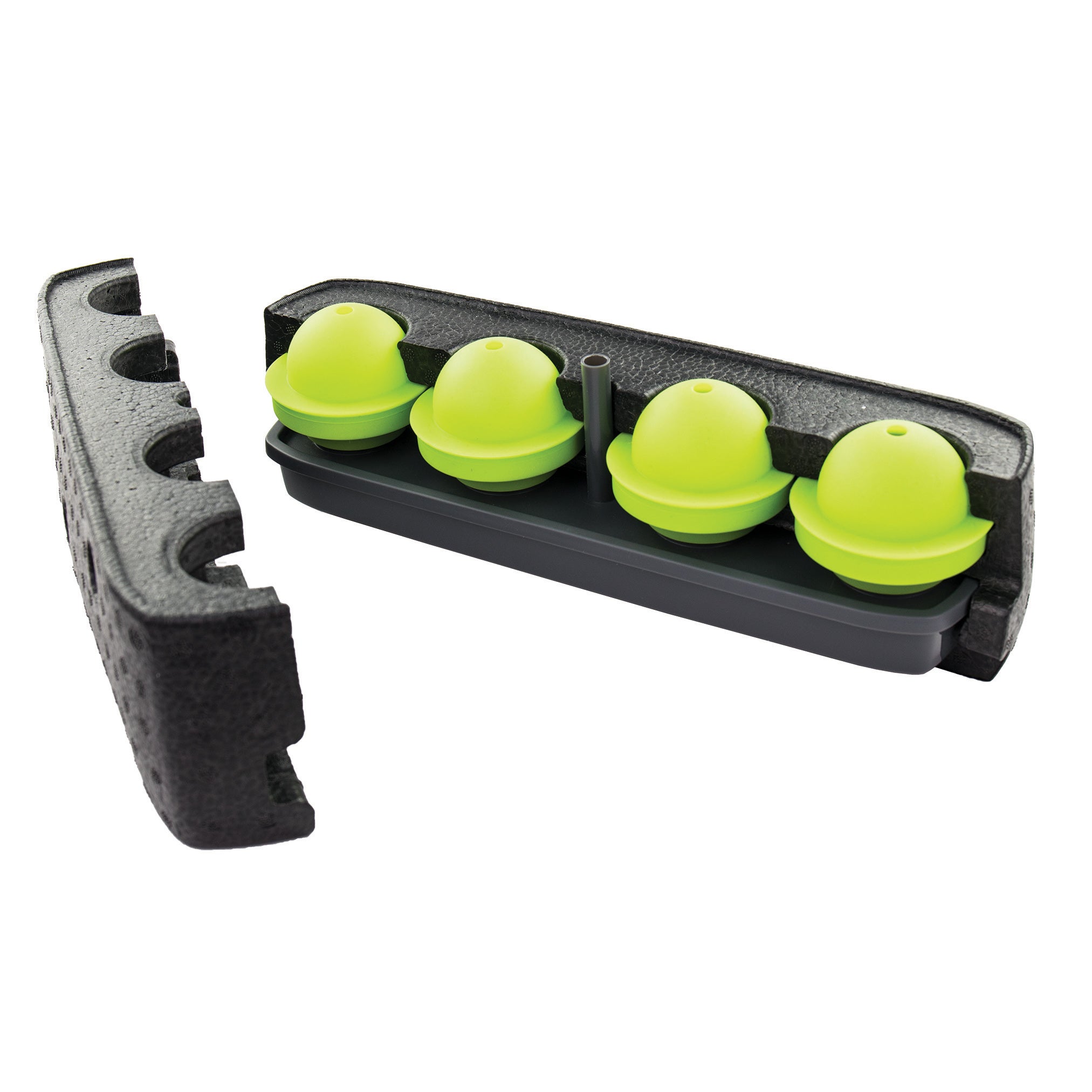
Common mistake: filling the mold with tap water straight from the sink. Filtered or boiled-then-cooled water freezes clearer, with far fewer trapped bubbles.
06. Three spirits, chosen on purpose
You don't need a full liquor store to make good drinks. Three bottles, picked deliberately, cover almost everything: a bourbon or rye you'd happily drink neat, a gin or a blanco tequila for anything citrus-forward, and one amaro or sweet vermouth for stirred, spirit-forward drinks. This is for readers 21 and older — buy from a licensed retailer in your state, and always drink responsibly.
The bourbon or rye is your anchor bottle — the one you'll pour most, neat or over the ice sphere from section 05. Look for a mid-priced, widely available bottle before chasing anything allocated or hard to find; a bottle you can always replace beats a rare one you're afraid to open. The gin or blanco tequila covers anything bright and citrus-forward — a Gin and Tonic, a Tommy's Margarita, a Paloma — and tends to be the most versatile bottle on a small shelf. The amaro or sweet vermouth is the one most home bars skip, and the one that unlocks stirred, spirit-forward classics like a Negroni or a Manhattan once you have it.
Common mistake: buying the biggest, most expensive bottle on the shelf first. A mid-priced bourbon you actually enjoy and finish is worth more than a splurge bottle that sits half-full for two years.
07. Bitters and one real mixer
A dash of bitters is the difference between a drink that tastes flat and one that tastes finished — it's a small bottle, it lasts for years, and it turns a plain spirit-and-soda into something closer to a real cocktail. Pick one classic aromatic bitters and one simple mixer (soda water, tonic, or a good ginger beer) before you buy anything more specialized.
A few dashes of aromatic bitters in a glass with a sugar cube and a large ice cube, topped with your bourbon, is the entire Old Fashioned — no shaker, no citrus, nothing else required. That one drink, made well with the six items above, will outperform almost anything more complicated you could attempt on a first pass at a home bar.
Common mistake: stocking five kinds of bitters and three mixers before you've used up your first bottle of each. Bitters keep for a long time; there's no need to rush the collection.
How to start
You don't need all six pieces on day one. In order of what actually changes your drink:
- Start here: two rocks glasses and a jigger. Under $60 combined, and it fixes the two biggest mistakes — the wrong vessel and the wrong pour — immediately.
- Add next: good ice. It's the cheapest possible upgrade to a drink you're already making.
- Then: the shaker tins and the decanter, once you know you're actually using the bar often enough to justify the display piece.
A home bar is one more place where the same instinct that goes into a clean business casual wardrobe or a pair of well-chosen dive watches applies: fewer things, chosen with intent, used often. Build the rest of your evening the same way — a good leather jacket for when people come over, maybe a post-workout reward once your abs routine earns it — and the Vices section for what to actually pour once the cart is set.
Shop the look


FAQ
How many bottles do I actually need for a home bar?
Three or four you'll actually finish beats twelve gathering dust. A good bourbon or rye, a gin or blanco tequila, and one bitter or amaro cover most classic drinks. Add from there, slowly, once you know what you reach for.
What's the one upgrade that makes the biggest difference?
Good ice. A dense, slow-melting cube or sphere keeps a drink cold without watering it down in ten minutes, which changes how a whiskey neat-adjacent pour or a stirred cocktail actually tastes by the last sip.
Is a home bar only useful for cocktails?
No. Everything here — the glass, the decanter, the ice — also improves a simple whiskey or tequila on the rocks. You don't need to know how to shake a Daiquiri to get value out of any of it. This content is for readers 21 and older; drink responsibly.