
How to Stop Sweating Through Your Dress Shirt at Work
Six fixes for sweating through a dress shirt at work: the right undershirt, breathable fabric, colors that hide it, fit, and the commute habits that help.

We pick every product independently. If you buy through our links, we may earn a commission at no cost to you. How we make money.
If you sweat through your shirt at work, it is not a character flaw. It is a wardrobe problem, and most of it is solvable with clothes. The fixes are not glamorous. They are the right layer underneath, the right fabric outside, and a couple of habits between the front door and your desk. This is the version you can apply this week, without changing your whole closet.
01. Fix the layer underneath first

The undershirt does more than any expensive shirt. A thin, fitted undershirt sits against your skin and takes the moisture there, so the dress shirt does not. That is the whole idea. The mistakes are small: a crew neck that shows at the collar, a baggy tee that bunches under the shirt, or a thick cotton that stays wet all day.
Pick a V-neck, so it stays hidden when you unbutton one button. Pick a fit that is close to the body with enough length to stay tucked. And pick a thin fabric that breathes, not the heavy tee you sleep in.

Mack Weldon's AIRKNITx Cotton V-Neck is a good example for about $42: cotton micro-mesh with a little stretch, slim fit, extra length. It is the kind of piece you buy in multiples and wear under every shirt.
Common mistake: wearing the undershirt only on the hot days. Wear it every day, so the dress shirt stays cleaner between washes.
02. Choose a fabric that lets air through
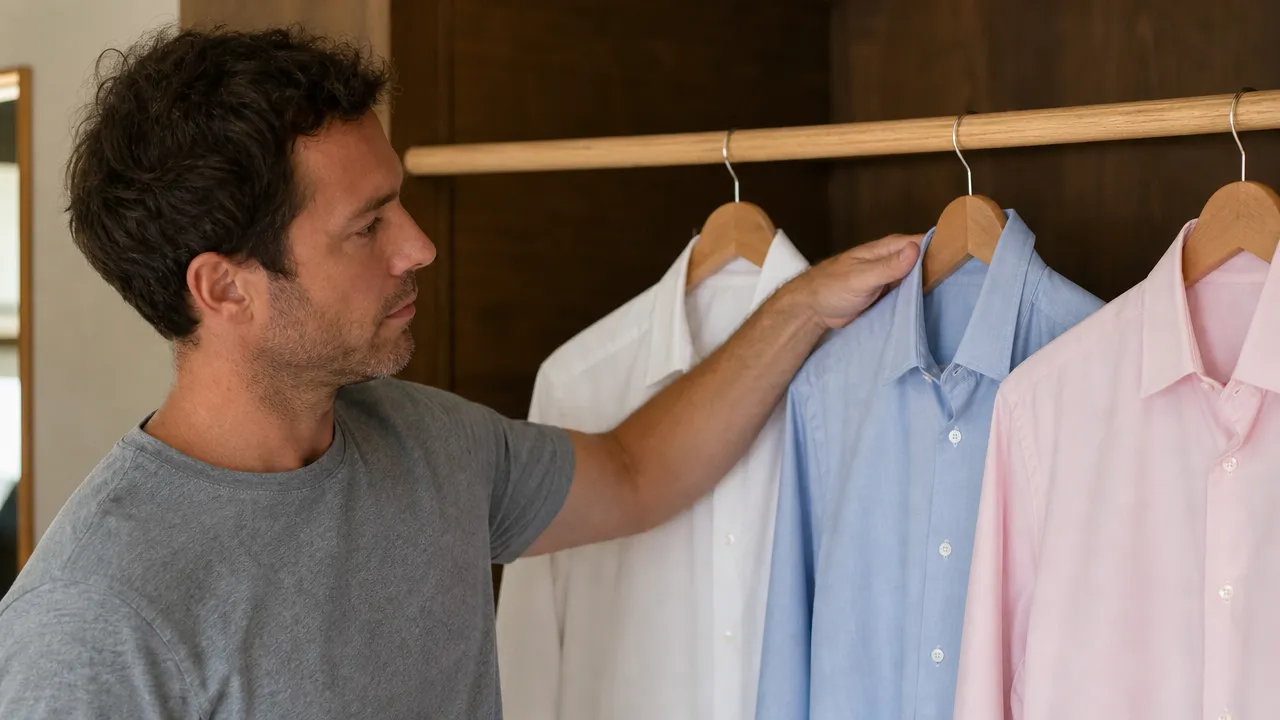
Not every dress shirt breathes the same way. A dense, heavy poplin holds heat. A lighter, open weave lets it go. Then there are the performance options: knits and woven polyester shirts made to wick moisture and dry fast.
That is where a brand like Ministry of Supply comes in. Its Apollo shirt uses an open pique knit and phase change material that the brand says helps regulate temperature, plus four-way stretch. Its AeroZero is a stretch woven with moisture-wicking fabric, a hidden button-down collar and built-in collar stays.

The trade-off is feel. These are technical fabrics, not fine cotton. If you dress up for a client meeting, a crisp cotton shirt still looks best. If you spend your day walking, presenting, or in a warm office, a performance shirt is the practical option. For dressing rules that apply to both, see our business casual guide.
Common mistake: buying by the label alone. Try the shirt, move your arms, and check that it does not cling.
03. Use color and pattern to your advantage

Some colors show sweat and some do not. As a rule of thumb, white and pale blue are forgiving, a fine pattern such as a micro-check or a thin stripe hides a damp patch better than a solid, and solid mid-grey is the one that shows it the most. If your shirts are mostly solid, add a textured or patterned one to the rotation.
Common mistake: wearing a plain grey shirt on a hot day. Save it for the cold months.
04. Get the fit right, not tight
A shirt that is too tight traps heat and tears at the underarm. One that is too loose bunches and clings in the wrong places. You want room through the chest and armholes with a clean shoulder seam.
Stretch fabrics help, because they let you move without pulling. Many brands sell a slim and a standard fit, and the standard is usually the one to pick if you run warm. Ministry of Supply's standard cut, for example, is two inches wider through the chest than its slim cut.

Common mistake: buying a slim shirt for the look and then sitting in it for eight hours.
05. Change what happens between the door and the desk

A lot of the sweat happens before you sit down. Carry the blazer instead of wearing it on the walk. Roll the sleeves for the commute and unroll them at the desk. Leave earlier, so you are not rushing the last block. Cool down for a few minutes in the lobby before a meeting, not in the meeting.
The same logic applies to travel. A wrinkle-resistant shirt that washes in a sink is one of the best things to pack, and our carry-on packing guide covers the rest of the bag.
Common mistake: putting the jacket on before you arrive and taking it off when you are already damp.
06. Keep a spare, and rotate
Keep one clean shirt at the office. A spare in the drawer means a bad morning is a five-minute fix, not a wasted day. At home, rotate your shirts and wash them soon after wearing, because sweat that sits in the fabric is what leaves stains and smell. If you are building a full work wardrobe, our work capsule wardrobe shows how few pieces you need, and how to wear an overshirt covers a good layer for the days you want to skip the shirt altogether.
How to start
Buy one thing first: two or three thin V-neck undershirts. It costs about $42 each for the Mack Weldon, and it changes more than a new shirt. If you want to go further, add one performance dress shirt for the hardest days, either the Ministry of Supply Apollo (about $168) or AeroZero (about $150). Keep the rest of your closet, and use the color and pattern rules above. For more on dressing for the office, browse Work Style and the Style section.
Shop the look


Our guides for this look: How to Wear an Overshirt This Fall: 4 Ways That Work, and 4 to Buy · 5 Work Outfits From Macy's, From $203.39: Nine Pieces, Up to 56% Off · 5 Outfits for the Work Week From Marks & Spencer: 11 Pieces, One Formula
FAQ
What is the best undershirt to stop sweat showing through a dress shirt?
A thin, fitted undershirt in a breathable or moisture-wicking fabric that matches your skin tone more than the shirt. It absorbs sweat at the skin, so it does not soak into the dress shirt. Pick a V-neck, so it stays hidden.
What color dress shirt hides sweat best?
White and pale blue are the safest for most offices, and a small pattern such as a micro-check or a fine stripe hides a damp patch better than a solid. Solid mid-grey is the color that shows wet patches most.
Are moisture-wicking dress shirts worth it?
If you commute on foot, run hot, or travel a lot, yes. A knit or performance woven from a brand like Ministry of Supply costs more than a basic shirt, but it also does not need ironing. For a short, air-conditioned day, a good undershirt under a normal cotton shirt may be all you need.